| Name | Speciality | Medical Registration Number | ABEAS Attendance ID | Teaching Designation |
|---|---|---|---|---|
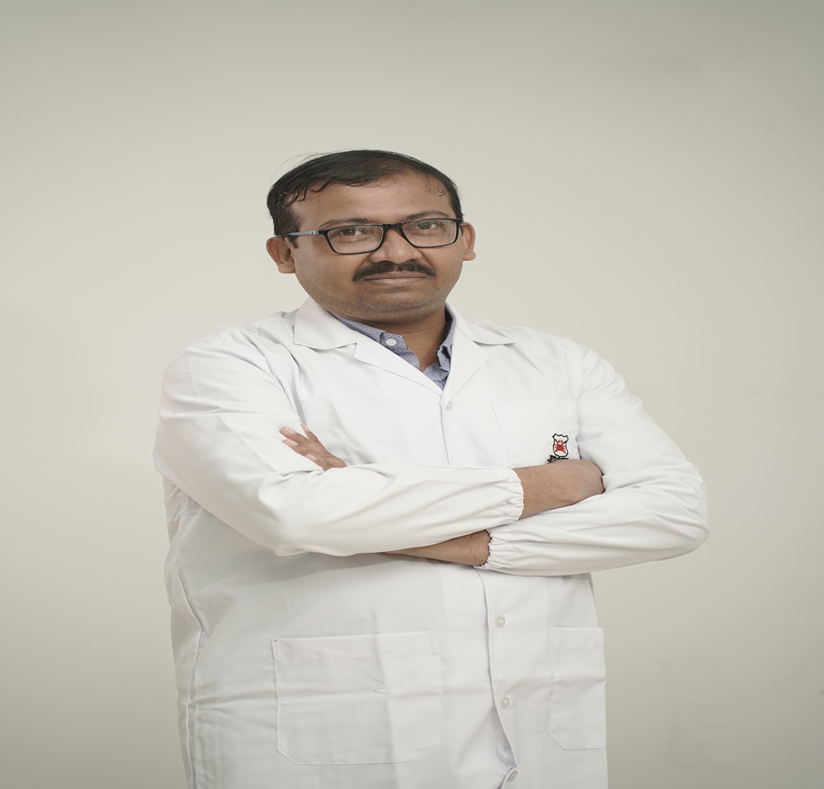
| Dr. Subhasis Barik Senior Scientific Officer-II |
Cancer Research |
Education
Ph.
D. 2013, Chittaranjan National Cancer Institute, Jadavpur University, Kolkata.
M.
Sc. 2007 (Microbiology), Bidhannagar College, University of Calcutta.
B. Sc. 2005 (Microbiology-Hons), Vijaygarh Jyotish Ray College, University of Calcutta.
Post-doctoral Research:
Department
of Cancer Biology & Inflammatory Disorder, Indian Institute of Chemical
Biology (CSIR-IICB), Kolkata (2017-2018).
Department of Molecular Microbiology and Immunology, University of Missouri School of Medicine, Columbia, Missouri, USA (2014-2017).
Contact:
(Email: barik.subhasis@gmail.com , subhasisbarik@cnci.ac.in
Phone: 91-33-24765101;Extn:
333)
Research
The lab
tries to understand the mechanistic basis of immune cell heterogeneity and
heterotypic immune cell interactions in the context of pathologies like cancer
and inflammation. The principal focus of our research is to understand how the
combination of immune cell-intrinsic and extrinsic regulations shapes the
processes of T cell development and peripheral T cell tolerance in these
conditions.
List of Publication (Selected)
1. De R, Barik S, Hossain ST,
Mukherjee SK. Combinatorial antibiofilm and anti-virulence effects of
silibinin-BSA nanoparticles and gentamicin against Pseudomonas aeruginosa:
Insights into quorum sensing-mediated molecular mechanisms. Int J Biol
Macromol. 2026 Apr;354:151398. doi: 10.1016/j.ijbiomac.2026.151398. Epub
2026 Mar 11. PMID: 41825667.
2. Guha A, Sultana J, Bhuniya A,
Chakravarti M, Bera S, Sarkar A, Dhar S, Choudhury PR, Das P, Das J, Ganguly N,
Guha I, Bairagya D, Das T, Alam N, Ghosh I, Hajra S, Barik S, Mukherjee
KK, Baral R, Bose A, Banerjee S. Tumor-educated-platelets interact with breast
cancer-stem-cells via P-selectin-PSGL1 and ensure stemness and metastasis
through WNT-β-catenin-VEGF-VEGFR2 intra-cellular signaling: therapeutic
modulation by aspirin. Breast Cancer Res. 2025 Dec 15;28(1):15. doi:
10.1186/s13058-025-02185-5. PMID: 41398295; PMCID: PMC12821943.
3. Paul, Paramita; Barik, Subhasis.
Ferroptosis in Tumor Microenvironment: An Alternative Mode of Cell Death and
Its Clinical Significance in Cancer. Journal of Current Oncological Trends
1(2):p 69-75, Jul–Dec 2024. | DOI: 10.4103/JCOT.JCOT_10_24
4. Das N, Roy J, Patra B, Saunders E,
Sarkar D, Goon S, Sinha BP, Roy S, Roy S, Sarif J, Bandopadhyay P, Barik S,
Mukherjee S, McNamara N, Varghese S, Simpson K, Baell J, McConville M, Ganguly
D, Talukdar A. Hit-to-lead optimization of 2-aminoquinazolines as
anti-microbial agents against Leishmania donovani. Eur J Med Chem. 2024
Apr 5;269:116256. doi: 10.1016/j.ejmech.2024.116256. Epub 2024 Feb 27. PMID:
38461679.
5. Kar A, Mukherjee SK, Barik S,
Hossain ST. Antimicrobial Activity of Trigonelline Hydrochloride Against Pseudomonas
aeruginosa and Its Quorum-Sensing Regulated Molecular Mechanisms on
Biofilm Formation and Virulence. ACS Infect Dis. 2024 Feb
9;10(2):746-762. doi: 10.1021/acsinfecdis.3c00617. Epub 2024 Jan 17. PMID:
38232080.
6. Kar A, Samanta A, Mukherjee S, Barik
S, Biswas A. The HBV web: An insight into molecular interactomes between
the hepatitis B virus and its host en route to hepatocellular carcinoma. J
Med Virol. 2023 Jan;95(1):e28436. doi: 10.1002/jmv.28436. PMID: 36573429.
7. Mukherjee S, Kar A, Paul P, Dey S,
Biswas A, Barik S. In Silico Integration of
Transcriptome and Interactome Predicts an ETP-ALL-Specific Transcriptional
Footprint that Decodes its Developmental Propensity. Front Cell Dev Biol.
2022 May 13;10:899752. doi: 10.3389/fcell.2022.899752. PMID: 35646901; PMCID:
PMC9138408.
8. Mukherjee S, Kar A, Khatun N, Datta P,
Biswas A, Barik S. Familiarity Breeds Strategy: In Silico Untangling of
the Molecular Complexity on Course of Autoimmune Liver
Disease-to-Hepatocellular Carcinoma Transition Predicts Novel Transcriptional
Signatures. Cells. 2021 Jul 29;10(8):1917. doi: 10.3390/cells10081917.
PMID: 34440687; PMCID: PMC8394127.
9. Barik S, Cattin-Roy AN, Ukah TK, Miller MM,
Teixeiro E, Zaghouani H. Type II Cytokines Fine-Tune Thymic T Cell Selection to
Offset Murine Central Nervous System Autoimmunity. J Immunol. 2020 Oct
15;205(8):2039-2045. doi: 10.4049/jimmunol.2000614. Epub 2020 Sep 11. PMID:
32917785; PMCID: PMC7541690.
10. Miller MM, Barik S, Cattin-Roy
AN, Ukah TK, Hoeman CM, Zaghouani H. A New IRF-1-Driven Apoptotic Pathway
Triggered by IL-4/IL-13 Kills Neonatal Th1 Cells and Weakens Protection against
Viral Infection. J Immunol. 2019 Jun 1;202(11):3173-3186. doi:
10.4049/jimmunol.1800943. Epub 2019 Apr 17. PMID: 30996000; PMCID: PMC6529256.
11. Barik S, Cattin-Roy AN, Miller MM, Ukah TK,
Zaghouani H. IL-4 and IL-13 Guide Early Thymic Progenitors To Mature toward
Dendritic Cells. J Immunol. 2018 Nov 15;201(10):2947-2958. doi:
10.4049/jimmunol.1701186. Epub 2018 Oct 5. PMID: 30291166; PMCID: PMC6219934.
12. Barik S, Miller M, Cattin-Roy A, Ukah T,
Zaghouani H. A distinct dendritic cell population arises in the thymus of
IL-13Rα1-sufficient but not IL-13Rα1-deficient mice. Cell Immunol. 2018
Sep;331:130-136. doi: 10.1016/j.cellimm.2018.06.006. Epub 2018 Jun 18. PMID:
29929727; PMCID: PMC6092245.
13. Barik S, Miller MM, Cattin-Roy AN, Ukah TK,
Chen W, Zaghouani H. IL-4/IL-13 Signaling Inhibits the Potential of Early
Thymic Progenitors To Commit to the T Cell Lineage. J Immunol. 2017 Oct
15;199(8):2767-2776. doi: 10.4049/jimmunol.1700498. Epub 2017 Sep 11. PMID:
28893952; PMCID: PMC5679405.
14. Ukah TK, Cattin-Roy AN, Chen W, Miller
MM, Barik S, Zaghouani H. On the Role IL-4/IL-13 Heteroreceptor Plays in
Regulation of Type 1 Diabetes. J Immunol. 2017 Aug 1;199(3):894-902.
doi: 10.4049/jimmunol.1700410. Epub 2017 Jun 23. PMID: 28646042; PMCID:
PMC5526720.
15. Chen W, Wan X, Ukah TK, Miller MM, Barik
S, Cattin-Roy AN, Zaghouani H. Antigen-Specific Immune Modulation Targets
mTORC1 Function To Drive Chemokine Receptor-Mediated T Cell Tolerance. J
Immunol. 2016 Nov 1;197(9):3554-3565. doi: 10.4049/jimmunol.1601032. Epub
2016 Sep 26. PMID: 27671108; PMCID: PMC5101142.
16. Barik S, Sureka K, Mukherjee P, Basu J, Kundu
M. RseA, the SigE specific anti-sigma factor of Mycobacterium tuberculosis, is
inactivated by phosphorylation-dependent ClpC1P2 proteolysis. Mol Microbiol.
2010 Feb;75(3):592-606. doi: 10.1111/j.1365-2958.2009.07008.x.Epub 2009 Dec 16.
PMID: 20025669.
Mukherjee P, Sureka K, Datta P, Hossain T, Barik S, Das KP, Kundu M, Basu J. Novel role of Wag31 in protection of mycobacteria under oxidative stress. Mol Microbiol. 2009 Jul;73(1):103-19. doi: 10.1111/j.1365-2958.2009.06750.x.Epub 2009 Jun 1. PMID: 19496931.
Book Chapters
1. Mukherjee S, Baidya A, and Barik S.
"Immunotherapy, and Others." Cancer Diagnostics and Therapeutics:
Current Trends, Challenges, and Future Perspectives (2022): 377.
2.
Paul
P, Chattopadhyay S, Kar A, Samanta A, Bhakat S, Paul P, Biswas A and Barik S. Cancer Microenvironment.
Chapter 2, “Novel Molecular Oncotargets and Nano-Oncotherapeutics”, edited by
Biswajit Mukherjee, Cambridge scholars publishing, 2023, pp. 17-87.
Extramural Project as PI
1. DBT-Ramalingaswami Fellowship (“Environmental
regulation on T cell development and autoimmunity”) 2019-2024.
2.
SERB-CRG
Project: “Targeting the role of serum acute phase proteins to induce peripheral
T cell tolerance inbreast, ovary and colon carcinoma. 2020-2023.
Research Fellow
1.
Mr.
Soumyadeep Mukherjee, CSIR-SRF (AIR-1; 2019), MS (Life Science), IISC-
Bangalore.
2.
Ms.
Paramita Paul, CSIR-SRF (AIR-114; 2019), M. Sc. (Zoology), Vidyasagar College,
University of Calcutta.
3.
Mr.
Dhrubajyoti Bairagya, CSIR-JRF (AIR-69; 2023), M. Sc. (Zoology), West Bengal
State University.
4.
Ms.
Ipsita Banerjee, CSIR-JRF (AIR-66; 2023), M. Sc. (Zoology), West Bengal State
University.
Opportunity
Ph.D. positions: Highly motivated students
with CSIR/UGC/ICMR/DBT-JRF or INSPIRE fellowship are
encouraged to apply directly to Subhasis (barik.subhasis@gmail.com) with a
letter of interest along with CV.
Postdoc positions: Interested and qualified Ph.D.
holders may contact for postdoctoral
position to Subhasis (barik.subhasis@gmail.com)
with their CV and research interest. Forpostdoctoral fellowships application in
ANRF-NPDF, CSIR-RA, ICMR-RA, and DBT-RA, DST-Women scientist will be supported.