| Name | Speciality | Medical Registration Number | ABEAS Attendance ID | Teaching Designation |
|---|---|---|---|---|
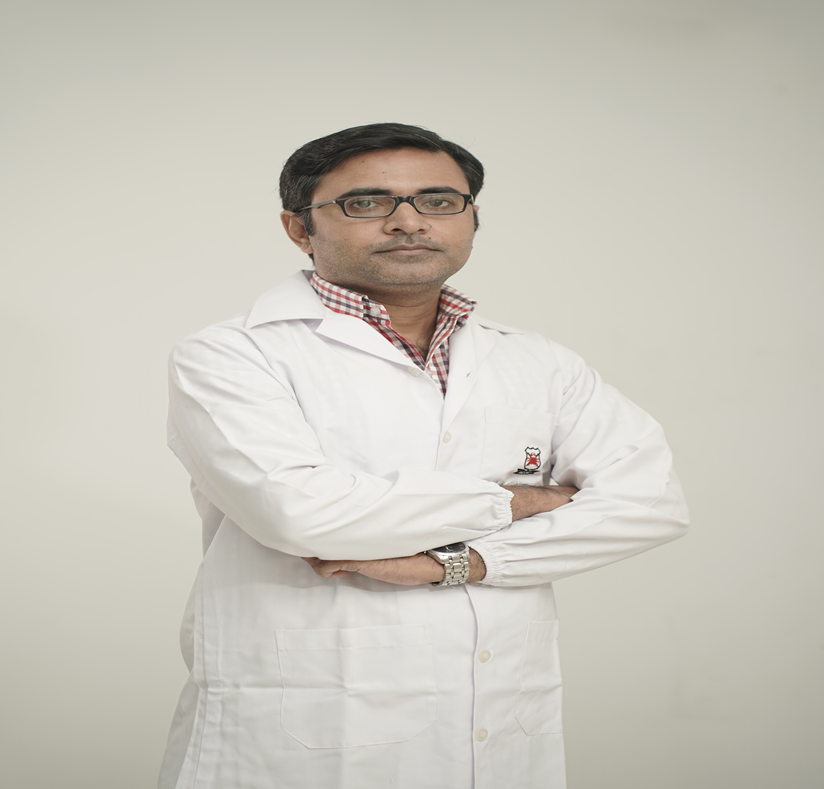
| Dr. Avik Biswas Senior Scientific Officer-II |
Cancer Research |
Education
Email(s): avik.b29@gmail.com ; avikbiswas@cnci.ac.in
Orcid ID: 0000-0001-8220-8451
Bio:
Dr. Biswas holds undergraduate and postgraduate degrees in Microbiology and Biotechnology respectively.
He further earned his PhD in Biotechnology, followed by Postdoctoral training from USA.
Area of interest:
His group is focused on exploring the molecular basis of the regulation of different genetic/signaling
pathways in both viral and non-viral cancers, while emphasizing protein-protein and protein-RNA
interactions at critical nodes of signaling pathways.
Professional experience (in chronological order)
|
Sl.No |
Positions held |
Name of the Institute |
|
1. |
Senior Scientific Officer, Grade-II (Ongoing….) |
Chittaranjan National Cancer Institute, Kolkata,
India. |
|
2. |
Research Associate |
Saint Louis University, Missouri, USA |
|
3. |
Research Associate |
The Scripps Research Institute, Florida, USA |
|
4. |
Postdoctoral fellow |
Tulane University, Louisiana, USA |
|
5. |
PhD |
ICMR Virus Unit, Kolkata, INDIA |
Professional Recognition/ Award/ Prize/ Certificate, Fellowship received by the applicant
|
Sl No |
Name of Award |
Awarding Agency |
Year |
|
1. |
Research Associate fellowship |
Saint Louis University, USA. |
2017 |
|
2. |
Research Associate fellowship |
The Scripps Research Institute, USA The Scripps Research Institute Presidential
Fellowship Award. |
2014 |
|
3. |
Postdoctoral fellowship |
Tulane
University, USA |
2013 |
|
4. |
Senior research fellowship |
Council of Scientific and Industrial Research, Govt.
of India, INDIA |
2009 |
Extramural Projects:
(i)
Funding
agency: ICMR, Govt. of India (2025 to 2028) (Role: PI) (Ongoing).
(ii) Funding agency: DHR-GIA, Govt. of India (2023 to 2026) (Role: Co-PI) (Ongoing).
(iii) Funding agency: DST-SERB, Govt. of India (2020 to 2022) (Role: PI) (Completed).
Lab members:
·
Dr.
Pieu Adhikary- PDF-ICMR Project.
·
Arpita
Kar- UGC-SRF.
·
Abhishek
Samanta- DST-SERB Fellow/CNCI Fellow.
· Sandipan Mukherjee- UGC-SRF
· Nikita Saha- CSIR-JRF.
Membership
[1] Life Member “Indian Association for Cancer
Research (IACR)”, Membership ID: 1001.
[2] Life member “Society of Biological Chemists”
(SBC), Membership ID: 2875.
[3] “American Society For
Microbiology” (ASM)
USA, Post-Doctoral member. Membership ID: 57494858.
[4] “American Society for Virology”
(ASV), USA, Research
Associate Member.
PEER-REVIEWED PUBLICATIONS
For a full list of publications, please visit: https://scholar.google.com/citations?user=zEWf1ssAAAAJ&hl=en
Most recent publications (last 5 years…)
[1] Ghosh S,
Chaudhuri R, Mukherjee M, Samanta A., Saha P, Henneman LRF, Majumdar D,
Sengupta MR, Chakraborty A, Maiti B, Ghosh S, Biswas A, Sinha D.
Seasonal fluctuations in ambient particulate matter2.5 exposure
differentially regulate JAK2/STAT3 signaling in never smoking rural and urban
cohorts. Free Radic Biol Med.2026.
doi:10.1016/j.freeradbiomed.2026.02.006.
[2] Samanta,
A., Kar, A., Mukherjee, S., & Biswas, A. (2025). The RNA-binding
protein hnRNP E1 regulates p53 and p21 translation via KH1 and KH2 domain
interactions with 3' UTR C-rich motifs. The Journal of Biological
Chemistry, 302(2), 111042.
[3] Kar A,
Mukherjee S, Mukherjee S, Biswas A. Ubiquitin: A double-edged sword in
hepatitis B virus-induced hepatocellular carcinoma. Virology 599 (2024)
110199.
[4] Paul P,
Chattopadhyay S, Kar A, Samanta A, Bhakat S, Paul P, Biswas A, and Barik
S. Cancer Microenvironment In the book entitled “Novel Molecular Oncotargets
and Nano-Oncotherapeutics” published by the Cambridge Scholars Publication.
2023 (book chapter).
[5] Biswas
A and Datta S. Editorial: Origin and evolution of hepatitis viruses, volume
II. Front. Microbiol. 2023; 14:1241705. doi: 10.3389/fmicb.2023.1241705.
[6] Kar
A, Samanta A, Mukherjee S, Barik
S, Biswas A. The HBV web: An insight into molecular interactomes between
the hepatitis B virus and its host en route to hepatocellular carcinoma. J
Med Virol. 2023 doi: 10.1002/jmv.28436.
[7] Mukherjee
S, Kar A, Paul P, Dey S, Biswas A, Barik S. In Silico Integration
of Transcriptome and Interactome Predicts an ETP-ALL-Specific Transcriptional
Footprint that Decodes its Developmental Propensity. Front Cell Dev Biol.
2022 May 13;10:899752. doi: 10.3389/fcell.2022.899752.
[8] Mukherjee S, Kar A, Khatun N, Datta P, Biswas A, Barik S. Familiarity Breeds Strategy: In Silico Untangling of the Molecular Complexity on Course of Autoimmune Liver Disease-to-Hepatocellular Carcinoma Transition Predicts Novel Transcriptional Signatures. Cells. 2021 Jul 29;10 (8):1917.
Join our team
Students with an excellent academic background and a strong research
interest are encouraged to apply for PhD and postdoctoral positions in our
team. Interested candidates may send their applications along with relevant
documents to us via email.
Help us / research support:
We would be delighted to receive research supports form individual
philanthropists to further advance and strengthen our ongoing research
activities.