

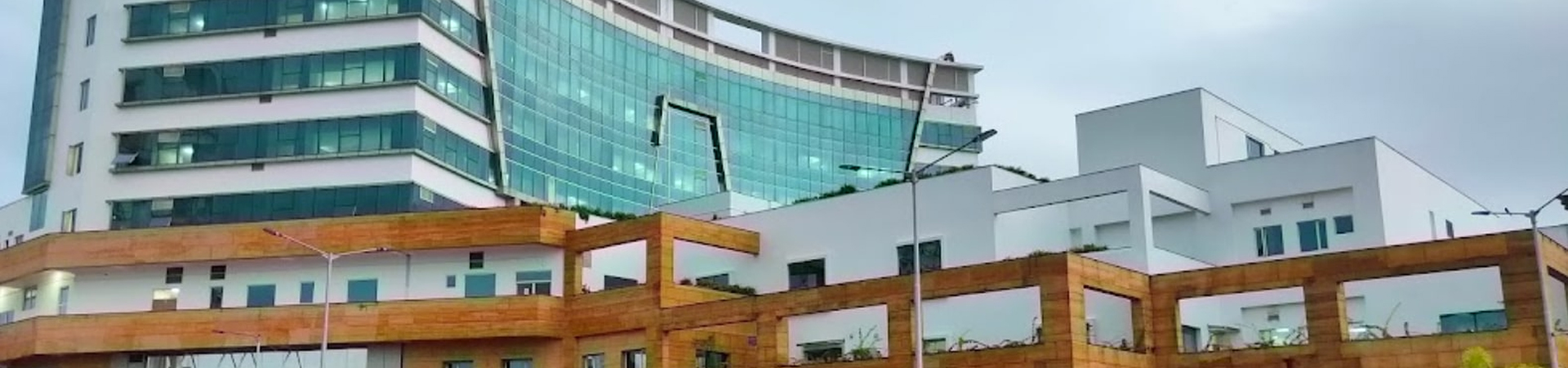
Department of Signal Transduction and Biogenic Amines is focused on exploring the molecular basis of the regulation of different genetic/signalling pathways in both viral and non-viral cancers, while emphasising protein-protein and protein-RNA interactions at critical nodes of signalling pathways.
Focus areas:The primary focus of the research group includes two very different aspects of the molecular basis of human carcinogenesis. The first aspect includes the molecular basis of Hepatitis B virus-mediated hepatocellular carcinoma by characterising the protein interactive landscape/network of the four HBV proteins (viz., S, P, Pol and X). The other aspect includes the molecular characterisation of the altered transcriptomic landscape during human cancer development and progression by a specific family of RNA-binding proteins, viz., heterogeneous nuclear ribonucleoproteins (hnRNPs). The long term goal is to target the procancerous interactive nodes (of protein-protein and protein-RNA interactions) by developing novel biologics with therapeutic potential.
Key research achievements:[1] Ghosh S, Chaudhuri R, Mukherjee M, Samanta A., Saha P, Henneman LRF, Majumdar D, Sengupta MR, Chakraborty A, Maiti B, Ghosh S, Biswas A, Sinha D. Seasonal fluctuations in ambient particulate matter2.5 exposure differentially regulate JAK2/STAT3 signaling in never smoking rural and urban cohorts. Free Radic Biol Med.2026. doi:10.1016/j.freeradbiomed.2026.02.006.
[2] Samanta, A., Kar, A., Mukherjee, S., & Biswas, A. (2025). The RNA-binding protein hnRNP E1 regulates p53 and p21 translation via KH1 and KH2 domain interactions with 3' UTR C-rich motifs. The Journal of Biological Chemistry, 302(2), 111042.
[3] Kar A, Mukherjee S, Mukherjee S, Biswas A. Ubiquitin: A double-edged sword in hepatitis B virus-induced hepatocellular carcinoma. Virology 599 (2024) 110199.
[4] Paul P, Chattopadhyay S, Kar A, Samanta A, Bhakat S, Paul P, Biswas A, and Barik S. Cancer Microenvironment In the book entitled “Novel Molecular Oncotargets and Nano-Oncotherapeutics” published by the Cambridge Scholars Publication. 2023 (book chapter).
[5] Biswas A and Datta S. Editorial: Origin and evolution of hepatitis viruses, volume II. Front. Microbiol. 2023; 14:1241705. doi: 10.3389/fmicb.2023.1241705.
[6] Kar A, Samanta A, Mukherjee S, Barik S, Biswas A. The HBV web: An insight into molecular interactomes between the hepatitis B virus and its host en route to hepatocellular carcinoma. J Med Virol. 2023 doi: 10.1002/jmv.28436.
[7] Mukherjee S, Kar A, Paul P, Dey S, Biswas A, Barik S. In Silico Integration of Transcriptome and Interactome Predicts an ETP-ALL-Specific Transcriptional Footprint that Decodes its Developmental Propensity. Front Cell Dev Biol. 2022 May 13;10:899752. doi: 10.3389/fcell.2022.899752.
[8] Mukherjee S, Kar A, Khatun N, Datta P, Biswas A, Barik S. Familiarity Breeds Strategy: In Silico Untangling of the Molecular Complexity on Course of Autoimmune Liver Disease-to-Hepatocellular Carcinoma Transition Predicts Novel Transcriptional Signatures. Cells. 2021 Jul 29;10 (8):1917.
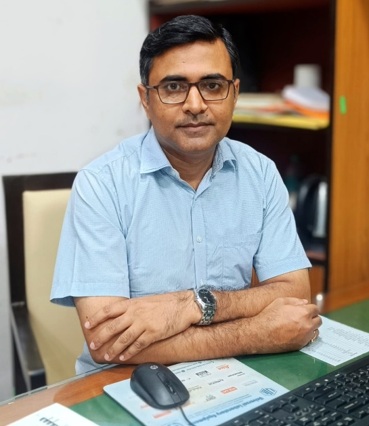
Dr. Avik Biswas
Senior Scientific Officer, Grade-IIavik.b29@gmail.com / avikbiswas@cnci.ac.in
Projects
| Sl No. | Name of the Project | Funded by | Status |
|---|---|---|---|
| 1 | Decrypting the regulatory landscape of heterogeneous nuclear ribonucleoproteins in breast cancer to establish an RNA-based molecular therapeutic strategy. | ICMR small grant scheme (Extramural) | Ongoing |
| 2 | Decrypting the proteo-transcriptomic basis of neoadjuvant chemotherapy refractory triple-negative breast cancer: decoding the molecular signatures of therapeutic response. | CNCI (Intramural Competitive grant) | Ongoing |
| 3 | Identification and characterisation of exosomal microRNAs with prognostic and therapeutic implications in non-small cell lung cancer: An approach towards molecular therapeutic developments for patients exposed to tobacco smoke and arsenic | DHR (GIA scheme) (Extramural) | Completed |
| 4 | Development of therapeutic peptides for blocking interactions between Hepatitis B Virus and host cellular proteins related with regulatory signaling pathways in hepatocellular carcinoma: A proteomic approach deciphering host-pathogen protein interactive network | SERB SRG (Extramural) | Completed |
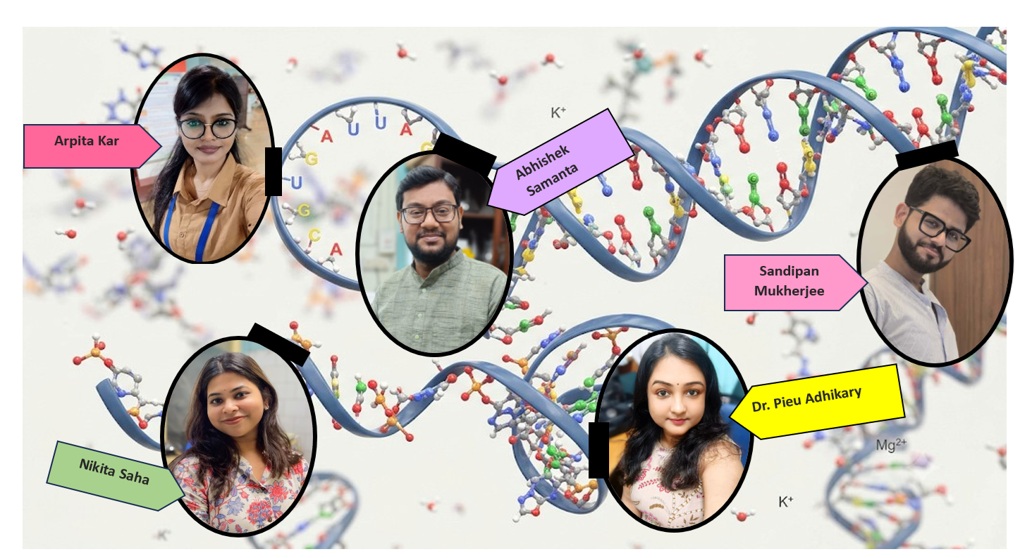
Students & Fellows
| Sl No. | Name of the Fellow | Funding Agency |
|---|---|---|
| 1 | Arpita Kar | UGC-SRF |
| 2 | Abhishek Samanta | DST-SERB Fellow |
| 3 | Sandipan Mukherjee | UGC-SRF |
| 4 | Nikita Saha | CSIR-JRF |
| 5 | Dr. Pieu Adhikary- PhD | ICMR Project Research Scientist |